Stairlifts for people with medical conditions: questions you should ask
Every medical condition is different. This page is not a substitute for medical advice, but it will help you ask the right questions when choosing a stairlift.
- No medical advice
- Questions for your doctor and therapist
- Think about tomorrow too
- Free of charge
- No obligation
- Indicative price immediately
Checking balance whilst seated
Operation: Strength and fine motor skills
Safety belt and lock
Background: Needs may change
What matters most when you have an illness?
The key factor is what the person is definitely capable of doing: sitting steadily, transferring to the seat, operating the lift and assessing the situation. Discuss this with your doctor or physiotherapist. Also clarify how your needs are likely to change, so that the lift will remain suitable for longer.
As at November 2026. Edited by Regional-Treppenlift. Figures are for guidance only and are subject to change.
Questions based on the situation
Osteoarthritis
Is it easy to get up from the seat? Can the handles and levers be operated with sore hands? Would a standing lift help with knee problems, or is sitting better?
Parkinson’s
Is the seat stable even when there are fluctuations throughout the day? Can the controls be operated safely? Does a motorised swivel seat help when getting off?
Dementia
Can the person still use the stairlift safely on their own? Is a safety lock required, and should it only be operated by relatives? Would a different housing arrangement be more suitable?
Following a stroke
Is one hand enough to fasten the harness and operate the controls? On which side should the controls be positioned? Is it safe to move the user from one seat to another?
You should clarify this for every situation
- Can the person sit steadily without assistance?
- Can she fasten the seatbelt herself?
- Can she hold or press the control button safely?
- Is it possible to get off safely at the top and bottom?
- Will a wheelchair or walking frame be needed soon?
- Who can help with day-to-day tasks and in an emergency?
During the on-site appointment
Be open with the specialist about what you find difficult in your day-to-day life. If possible, try out the controls and the seat. Ask for a swivel seat, controls on the side that suits you best and a harness that fastens easily. A home assessment can also be helpful.
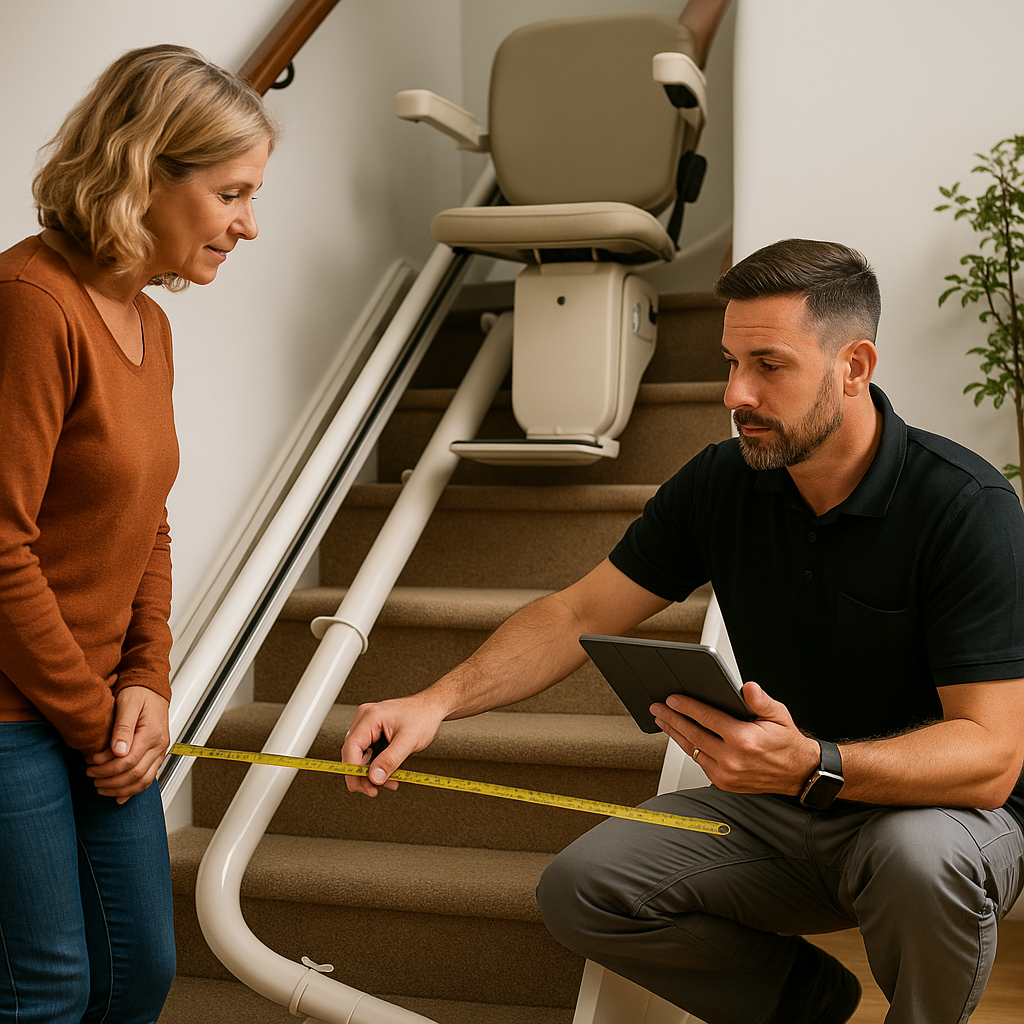
Let’s talk about your everyday life.
We listen to your needs and show you which options are suitable. Please discuss any medical questions with your doctor.
Frequently Asked Questions
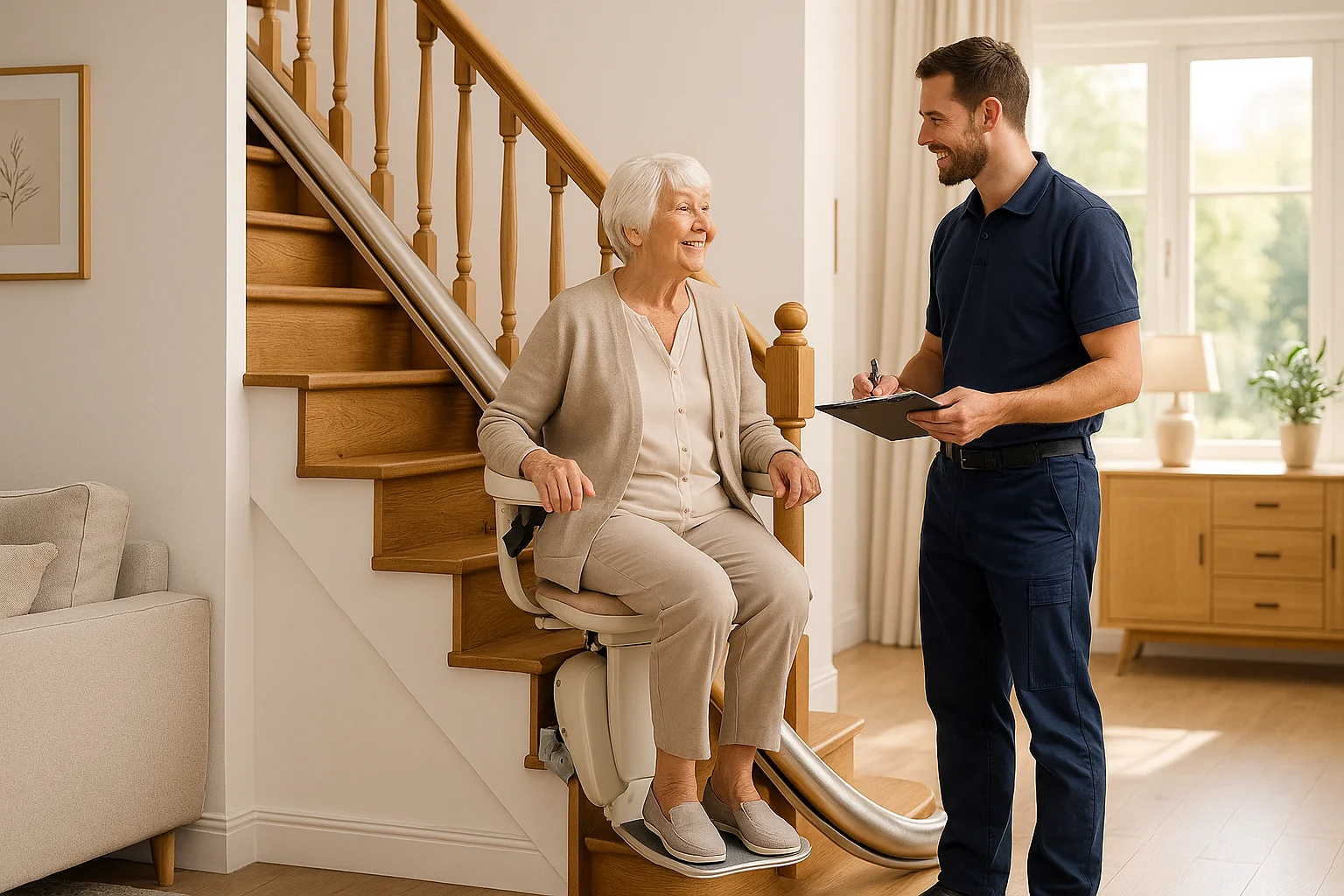
Can’t find your question here?
We’d be happy to answer them personally and free of charge.
Call 0800 3562673Does a doctor have to recommend the stairlift?
Not for the purchase itself. However, a medical assessment can help you choose the right option and is useful for the tax office.
What if the stairlift is no longer sufficient?
Discuss the likely course of action in advance. Renting or purchasing a second-hand stairlift may be worth considering if your needs are uncertain.
Related guides
- 24-hour care provided by a Polish carer: what relatives need to clarify
- Stairlifts for osteoporosis: When they can help and what you should bear in mind
- Electric wheelchairs and the home: what you should check regarding doors, space and steps before buying
- MDK assessment: procedure, questions, checklist and information on stairlift funding
You might also be interested in
Let’s find a stairlift that suits your everyday life.
The initial consultation is free of charge and without obligation. This applies even if you are enquiring on behalf of your parents.